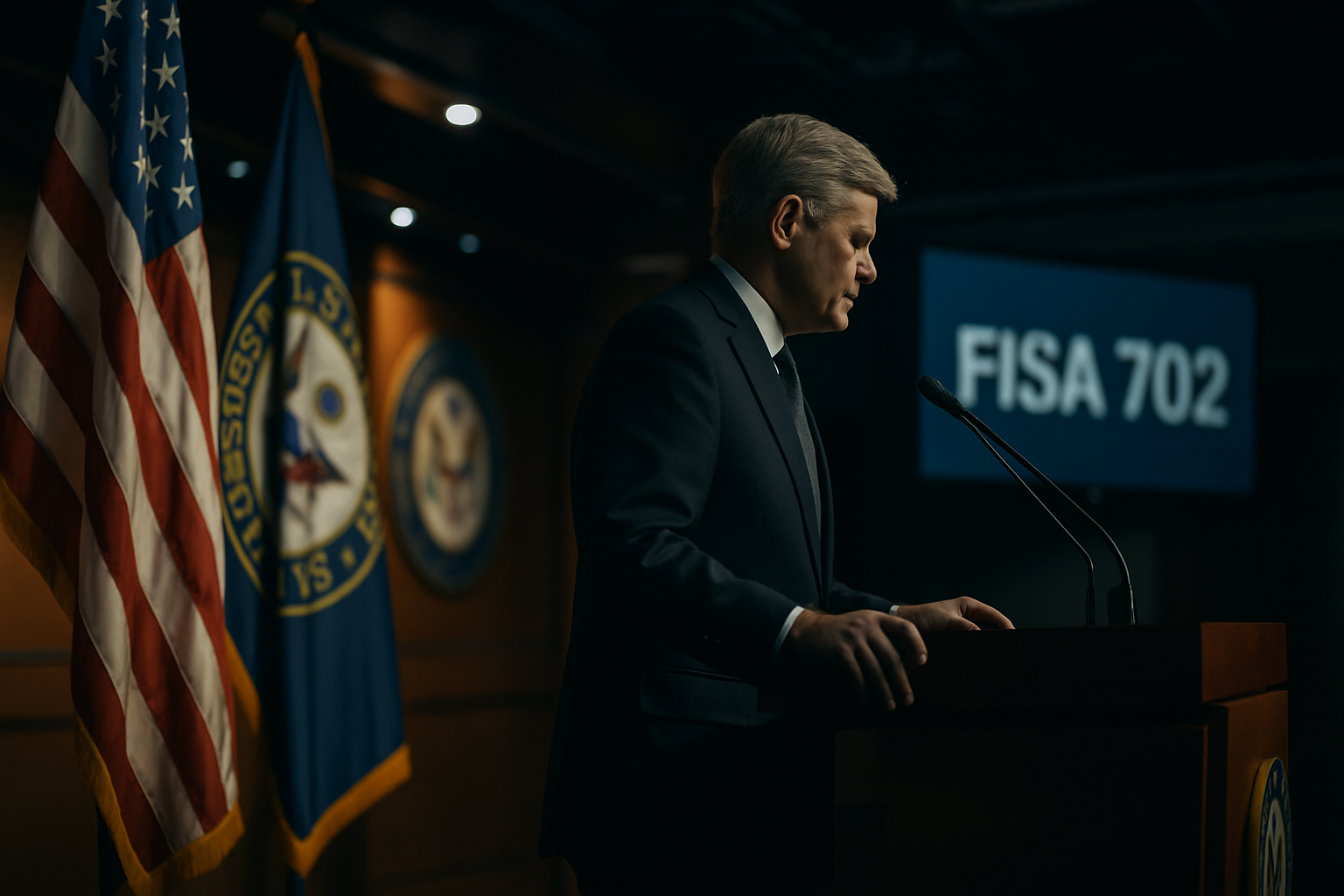
Speaker Johnson Proposes Third FISA 702 Compromise as Conservative Civil Liberties Advocates Push for Warrant Reforms
As the April 30 deadline looms for the reauthorization of the Foreign Intelligence Surveillance Act (FISA) Section 702, Speaker Mike Johnson has unveiled a third compromise proposal in an attempt to secure the necessary votes in the House. This comes after two previous proposals failed to gain approval, largely due to opposition from a coalition of conservative civil liberties advocates led by the Freedom Caucus. These lawmakers are demanding significant warrant reforms for queries involving U.S. persons.
Conservative Push for Warrant Reforms
The heart of the opposition against the current FISA 702 framework centers on concerns over privacy and civil liberties. Members of the Freedom Caucus, including Representatives Jim Jordan and Thomas Massie, have been vocal about the need for stricter warrant requirements when it comes to querying the communications of U.S. citizens. They argue that the existing framework allows for broad surveillance powers without adequate judicial oversight, potentially infringing upon the Fourth Amendment rights of Americans.
"The American people deserve a system that respects their privacy and mandates clear judicial oversight," stated Representative Jim Jordan. "We cannot allow unchecked surveillance to continue under the guise of national security."
This sentiment is echoed by Representative Thomas Massie, who has consistently advocated for stronger privacy protections. Massie has proposed amendments requiring law enforcement to obtain a warrant before accessing the communications of U.S. persons collected incidentally under FISA 702.
Speaker Johnson's Latest Proposal
In response to these demands, Speaker Johnson's latest proposal attempts to balance national security concerns with civil liberties protections. The plan introduces several reforms, including increased transparency measures and enhanced oversight by the Foreign Intelligence Surveillance Court (FISC). However, it stops short of requiring a warrant for all U.S. person queries, a sticking point for many conservatives.
Despite these concessions, the proposal still faces resistance from the Freedom Caucus, which remains steadfast in its demand for more robust checks on government surveillance powers. The group argues that without clear warrant requirements, the potential for abuse remains a significant concern.
National Security vs. Civil Liberties
While the national security camp emphasizes the importance of FISA 702 in preventing terrorism and protecting the nation, the conservative civil liberties wing highlights the risk of governmental overreach and the erosion of constitutional rights. The current debate underscores the ongoing struggle to find a legislative solution that adequately addresses both security and privacy concerns.
Proponents of the current FISA framework argue that the intelligence community relies on the flexibility provided by Section 702 to respond swiftly to emerging threats. However, this argument has done little to sway conservative lawmakers who remain focused on ensuring that the rights of American citizens are not compromised in the process.
Conclusion
As the April 30 deadline approaches, the House faces a critical decision on the future of FISA 702. Speaker Johnson's latest compromise proposal reflects an attempt to navigate the delicate balance between national security and civil liberties. However, the insistence of the Freedom Caucus on warrant reforms highlights a fundamental disagreement over the scope of government surveillance powers.
Whether this third proposal will garner enough support remains uncertain, but the debate has brought to the forefront the ongoing tension between maintaining security and safeguarding the constitutional rights of American citizens.
About the Author
Constitutional scholar and legal expert focused on originalist interpretations. "Adam Ivory examines how the U.S. Constitution should guide the regulation, deployment, and ethical use of artificial intelligence — without surrendering liberty to algorithms."