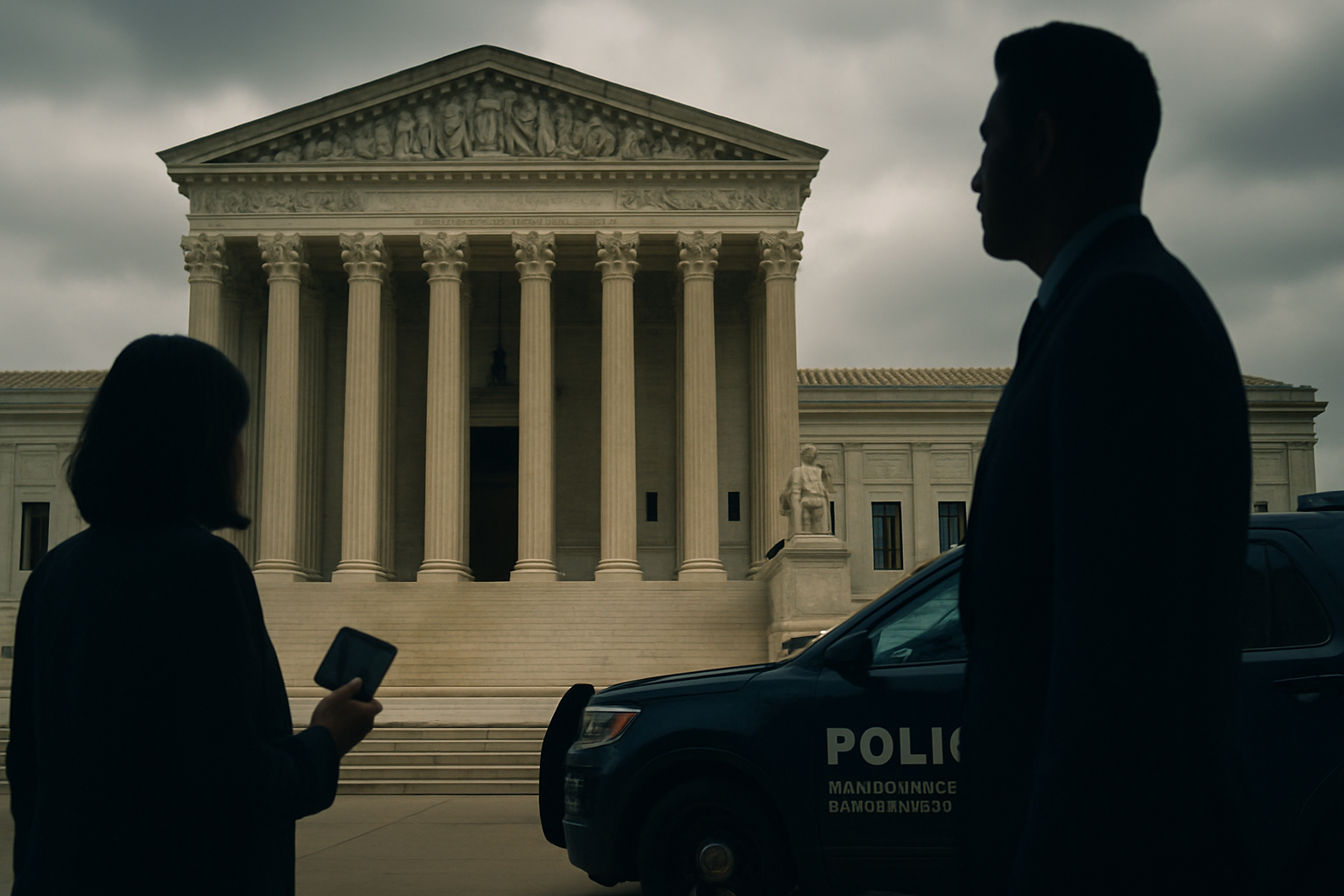
Supreme Court Considers Evidence Standard in Lau v. Garland: Implications for ICE and Green Card Holders
The United States Supreme Court is currently deliberating on a pivotal case, Lau v. Garland, which could redefine the evidence standard required for the Immigration and Customs Enforcement (ICE) to strip a lawful permanent resident of their green card. The case, argued on Wednesday, April 22, 2026, challenges a ruling by the 2nd Circuit Court of Appeals and could have far-reaching effects on immigration policy and enforcement.
Background of Lau v. Garland
In Lau v. Garland, the petitioner, Mr. Lau, is contesting the evidence standard used by ICE to revoke his status as a lawful permanent resident. Previously, the 2nd Circuit upheld the government's use of the "preponderance of the evidence" standard. However, Lau's legal team argues that a higher standard, "clear and convincing evidence," should be required due to the significant consequences of losing permanent residency.
The Government's Argument
The government, represented by the Attorney General, argues that the existing standard of "preponderance of the evidence" is sufficient and consistent with past immigration enforcement practices. This standard, often used in civil cases, requires that the evidence shows something is more likely true than not. The government maintains that altering this standard could complicate and slow down ICE's enforcement capabilities.
"The preponderance standard strikes a necessary balance in immigration enforcement," a government representative stated during oral arguments.
The Petitioner's Argument
Mr. Lau's legal team argues for a "clear and convincing evidence" standard, which would require a higher degree of certainty before a green card can be revoked. They contend that the severe ramifications of losing permanent residency—such as deportation and separation from family—warrant a more stringent standard of proof to protect individuals' rights.
"Revoking a green card is a life-altering decision that demands rigorous proof," the petitioner’s counsel argued.
Implications of the Case
The justices' deliberations have highlighted the broader implications of this decision, particularly in the context of immigration policies during the Trump administration, which had a more stringent approach towards immigration enforcement. A decision favoring a higher standard could be seen as a shift towards more protective measures for immigrants.
Justice discussions during the hearing reflected differing opinions on how such a change might impact the balance between enforcement and immigrants' rights. The case could reset the removal standard, affecting numerous cases where the government's evidence threshold was questioned.
Conclusion
The Supreme Court's decision in Lau v. Garland is highly anticipated and will likely have significant ramifications for immigration policy and enforcement practices in the United States. As the justices weigh the procedural and legal aspects, the outcome will determine how ICE and other immigration authorities will be required to prove cases against lawful permanent residents in the future. A ruling is expected in the coming months, and it will undoubtedly influence the ongoing dialogue surrounding immigration enforcement and rights.
About the Author
National security correspondent covering immigration policy and border enforcement.